

Chewing the emotional cud, problematic internet gaming and nicotine-related arrested development
Life On Mars #20

This week’s Life On Mars looks at high-quality research showing links between teenagers’ rumination, eroded well-being and poor sleep; why risk factors for problematic internet gaming can’t be foretold by a one-off survey; and a research review looking at possible biological mechanisms for links between exposure to nicotine in adolescence and later psychiatric disease.
Chewing the emotional cud is linked to worse well-being and sleep
Study title: Rumination Harmfulness: A Three-Level Meta-Analysis of the Relationship Between Rumination and Mental Health Among Adolescents (August 2025)

Cows chew the cud – they chomp on partially digested food to extract as many nutrients from it as possible. We’ve borrowed the word ‘rumination’ from this habit of cows and their fellow ruminants, including sheep, goats and buffalo. Our version of it is less nutritious: it involves cycles of negative thinking. According to the American Psychiatric Association, rumination ‘involves repetitive thinking or dwelling on negative feelings and distress and their causes and consequences’. There’s lots of research (here, for example) showing that rumination is linked to the later development of poor mental health in teenagers, and it may partly explain the growing evidence of links between mental health awareness programmes and worsening well-being in some teenagers who take part in them.
This new review published in the International Journal of Cognitive Behavioural Therapy involves a meta-analysis of the links between rumination and well-being, pooling data from more than 45,000 teenagers. Unsurprisingly, given existing knowledge in this area, it finds that teenagers who ruminate are more likely to experience low well-being, as measured by aspects such as life satisfaction and self-esteem. It adds some useful information, too – this link holds across different cultures and groups. The research team also found a link with sleep quality: teenagers who ruminate are more likely to sleep badly.
Takeaways: chewing the emotional cud doesn’t seem to be good for humans. Teenagers who ruminate may need our help to get out of their heads through sport, nature, films, conversation or any of various activities that involve them looking outwards, not inwards.
A one-off survey can’t tell us what predicts problematic internet gaming
Study title: Psychosocial Risk Factors and Adolescent Problematic Internet Gaming (PIG): The Mediating Roles of Deviant Peer Affiliation and Hedonic Gaming Experience (August 2025)

We’ve had cows. Now we have PIG, or problematic internet gaming, because researchers seem unable to leave convenient acronyms untouched. This type of gaming is defined here as ‘a problematic pattern of Internet gaming behavior that does not yet meet the clinical criteria for addiction but may still pose serious risks to adolescents’ well-being’.
This study, a collaboration between researchers from China and New Zealand, looks at the risk factors for problematic internet gaming. Researchers administered questionnaires to around 200 teenagers, measuring interpersonal incompetence (e.g. ‘I have difficulty communicating with others’), perceived stress (e.g. ‘How often have you been angry about things you can’t control?’), frustration (e.g. ‘I feel that I am unable to control the important things in my life’), emotional loneliness (e.g. ‘I don’t have any friends who share my views, but I wish I did’) and deviant peer affiliation (e.g. ‘How many of your friends have cheated on exams in the past six months?’). The research team also measured what they termed ‘hedonic gaming experience’, or how much teenagers enjoy playing games online, and how problematic their gaming was. This was measured by asking whether participants thought about playing games all day, or whether they felt depressed or irritated if they weren’t able to game.
Researchers started with a set of fourteen hypotheses, all of which they believed were confirmed by the study. They found, for example, that interpersonal incompetence predicted how stressed the teenagers felt; that stress made them feel frustrated; and that feeling frustrated was linked to emotional loneliness. ‘All four psychosocial risk factors,’ according to the study’s authors, ‘significantly predicted deviant peer affiliation, hedonic gaming experience, and ultimately, problematic internet gaming among adolescents.’
Their write-up uses confident causal language for a one-off survey: one area ‘predicted’ another, or ‘contributed’ to it, or even ‘led’ to it. It’s an overreach. Even with the most sophisticated data analysis, you can’t pull causality out of a single survey with a couple of hundred participants. This is especially true in the context of muddy timeframes – some questions weren’t clear what the timeframes were, and others had the old apple-and-pears comparison problem. Perceived stress, for example, was meant to predict deviant peer affiliation – but questions about peer affiliation went back half a year (‘How many of your friends got involved in fights during the past 6 months?’), while questions about stress only related to the previous month. It’s hard for one element to predict another when it post-dates it.
Takeaways: the study found some interesting correlations, but the idea that researchers demonstrated predictive links between psychosocial risk, risky peer links and gaming behaviour is, in my view, a stretch. Its authors recommend testing these links through longer-term research. This recommendation is stronger than their conclusion.
Arrested development: nicotine use is linked to long-term risk of mental illness
Study title: Adolescent Nicotine Exposure and Persistent Neurocircuitry Changes: Unveiling Lifelong Psychiatric Risks (August 2025)
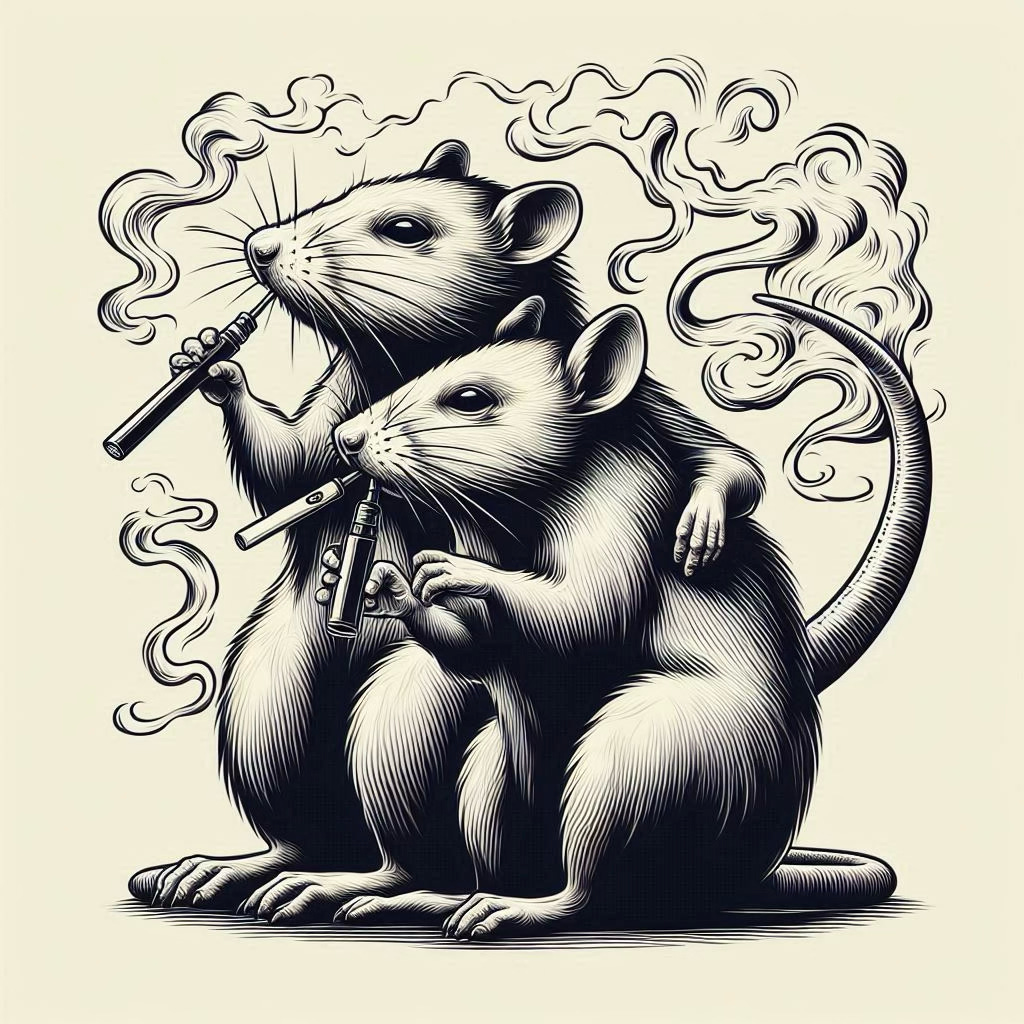
This review in the journal Molecular Psychiatry assesses the role of nicotine exposure during the teenage years in longer-term psychiatric disease. Its authors propose that nicotine may affect adolescent neurodevelopmental processes, leading to longer-term vulnerabilities to poor mental health and substance abuse. They summarise widespread behaviour-based research showing that nicotine during the teenage years makes people more sensitive to its rewards later, and that it can act as a ‘gateway drug’ to other stimulants in adulthood. The purpose of their paper is to look at some of the biological processes that might explain these links.
(From cows to pigs, and now onto mice and rats.) Rodent studies show that nicotine interrupts the workings of an important neurotransmitter and neuromodulator in the brain called acetylcholine, which itself can change ‘dopamine circuitry’ – the neural pathways through which dopamine is delivered throughout the brain. The transmission of dopamine in the brain is important for various functions, including how we think, how we make decisions and how we experience rewards. Changes in dopamine circuitry have been linked in humans to addiction, depression and schizophrenia. The review concludes that nicotine appears to cause persistent changes in acetylcholine and dopamine signalling, and that these ‘may contribute to the heightened risk for psychiatric disorders including substance abuse, anxio-depressive disorders, and schizophrenia for which deficits in a large spectrum of motivational domains are highly prevalent’. It suggests that adolescent nicotine exposure may even arrest the development of dopamine systems, but leaves this as an open question for future research.
Linked receptors are most abundant and responsive in adolescence, which may explain why nicotine is so tempting to the average teenagers.
Takeaways: this research review lends further weight to abundant evidence already suggesting that vaping is harmful. It’s also harder to detect than smoking, meaning (and sorry to end this edition of Life On Mars on a downer) that many of us won’t know when our teenagers are making themselves vulnerable to the long-term risks of nicotine.
Please comment below and share this Substack with anyone you think might find it interesting.